
The Journal
Whale Watching in Los Cabos: A Season Guide for Calm, Close Encounters
Humpbacks return to Los Cabos each winter. Here is how the season unfolds, how to choose your vessel, and how to plan a respectful, unhurried morning with the whales.
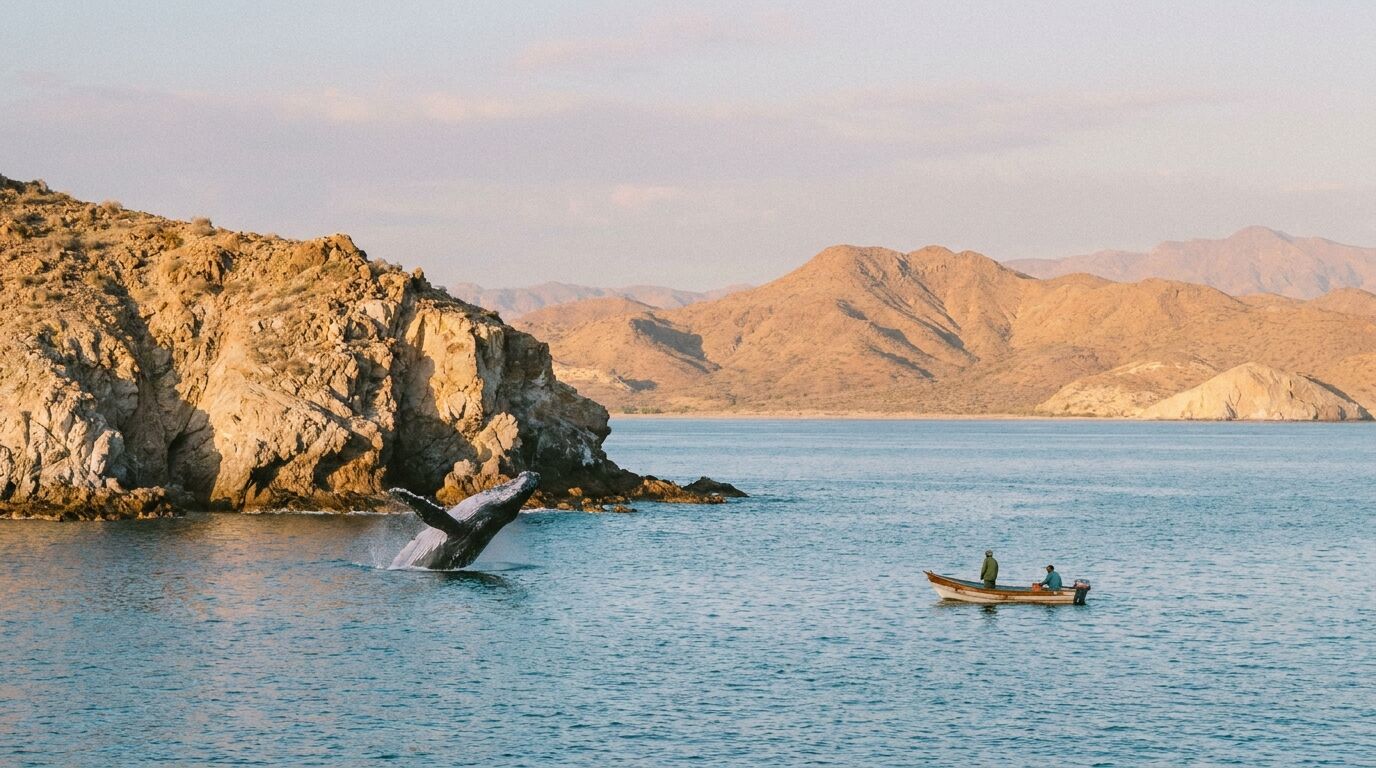
Each winter, the waters off Los Cabos become one of the most rewarding places in North America to watch humpback whales. They arrive from cold feeding grounds in the north to mate, give birth and nurse their calves in warm, sheltered water, and for a few months the meeting point of the Pacific and the Sea of Cortez becomes a stage for breaches, tail slaps and the long, haunting songs of the males.
This guide explains how the season unfolds, how to choose between a small expedition boat, a sailing catamaran and a private yacht, and what to ask before you book, so that your time with the whales is calm, close and respectful.
When Is Whale Season in Los Cabos?
Regulated whale watching in Los Cabos runs through the winter months, broadly from mid-December into April. The first humpbacks are often spotted in late autumn, numbers build through January, and February and March are generally regarded as the fullest weeks of the season, when mothers with young calves are present alongside competitive groups of males. By April, many whales have begun the journey north, although sightings can continue at the edges of the season.
Humpbacks are the headline species, but they are not the only visitors. Gray whales are occasionally seen passing the cape on their migration to and from the Pacific lagoons further up the Baja peninsula, and dolphins, sea lions, mobula rays and sea turtles add to the picture throughout the year.
Morning or afternoon?
Mornings tend to bring the calmest water and the softest light, which makes for comfortable viewing and good photographs. Afternoon departures can be just as productive for sightings, and a late outing can be paired with sunset over Land’s End. If anyone in your party is sensitive to motion, an early start on a smooth sea is the more forgiving choice.
Where the Whales Are
Most tours depart the Cabo San Lucas marina and head out past the Arch, where the seabed drops away quickly and whales are frequently found within a short ride of the harbor. Boats then work the waters along the Pacific side or along the Tourist Corridor toward San José del Cabo, following the activity rather than a fixed route. From the east, departures from Puerto Los Cabos give quick access to the Sea of Cortez coastline and the deeper water offshore of San José.
Because humpbacks are often visible from land, many residents and guests enjoy watching from a terrace on the corridor or a cliffside restaurant. A boat, though, offers something a view cannot: the sound of a blow nearby, the scale of a fluke rising beside you and, on a quiet day with a hydrophone, the song itself.
Choosing Your Vessel
The right boat depends on how you like to experience the water. Each style has a genuine place, and the choice is less about better or worse than about the morning you have in mind.
| Boat style | What it offers | Well suited to |
|---|---|---|
| Small expedition boat or zodiac | Low to the water, nimble, often guided by a naturalist or biologist | Photographers, curious travelers, families with older children |
| Sailing catamaran | Stable, spacious decks, shade and a relaxed pace | Mixed groups, those prone to seasickness, slower mornings |
| Private motor yacht | Comfort, privacy, food and drink on board, a flexible schedule | Celebrations, multigenerational families, combining whales with a cruise |
Among the dedicated whale watching operators in the directory, CaboTrek and Cabo Nature emphasize biologist-led outings, Proyecto Cetáceo brings a conservation and educational focus, and Whale Watch Cabo runs small-group humpback tours from the marina. For a slower pace, the sailing operators in our sailing and catamarans category often include whale sightings on winter sails, and many private luxury yacht charters will build a whale watching segment into a longer day at sea.
Responsible Whale Watching
Mexico regulates whale watching closely, and licensed operators are expected to keep a respectful distance, limit the time spent with any one group of whales, approach slowly from the side rather than head-on, and avoid separating mothers from calves. The whales choose how close they come; a good captain lets them.
When you book, it is entirely reasonable to ask whether the operator holds the federal permit for whale watching, how many passengers will be aboard, and whether a guide will explain behavior during the trip. The quality of the commentary often makes the difference between seeing whales and understanding them.
Reading the behavior
- Blow: the spout of exhaled air, often the first sign of a whale at a distance.
- Fluke-up dive: the tail lifts clear of the water before a deeper dive; the pattern under each fluke is unique to that animal.
- Breach: the whale launches much of its body out of the water, a display that is still not fully understood.
- Pectoral and tail slaps: repeated strikes on the surface, sometimes heard well before they are seen.
- Competitive groups: several males pursuing a female at speed, an energetic and memorable sight.
Combining Whales With the Rest of Your Day
Winter is also a lovely season for snorkeling and diving in calmer pockets of the coast, and some groups pair an early whale outing with an afternoon in the water. Sportfishing crews regularly report whale sightings on the way to the fishing grounds, so anglers in season often enjoy both. The operators in our diving and snorkeling category can advise which spots are sheltered on a given day.
For those spending the full season in Los Cabos rather than a week, the winter rhythm of whales offshore becomes part of daily life, visible from many homes along the coast. If you have wondered what it would be like to watch the season unfold from your own terrace, our guide to owning a home in Los Cabos offers a calm introduction to the communities and the process.
Some visitors also build a wider wellness rhythm around the winter months, from early ocean mornings to spa afternoons; our sister site Los Cabos Longevity gathers the region’s health and wellbeing resources.
Photographing Whales Well
Whales rarely surface exactly where you expect, so a little preparation helps. Set a fast shutter speed, use continuous shooting mode and keep the horizon level. A moderate zoom lens is usually more useful than a very long one, since boats keep their distance and the whales move quickly. Above all, watch the water rather than the screen: the blow comes first, the back follows, and the fluke tends to appear just as the whale prepares to dive.
Before You Go
- Book ahead for February and March, when demand is highest.
- Ask about the permit, group size and whether a naturalist is on board.
- Choose a morning departure if anyone is prone to seasickness, and take any remedy well before leaving the dock.
- Bring a light layer: winter mornings on the water are cooler than on land.
- Pack polarized sunglasses and a camera with a fast shutter, and remember to look up from the screen.
- Use reef-safe sunscreen and keep everything secured on deck.
Whale season in Los Cabos rewards patience. Settle in, let the captain read the water, and allow the whales to set the pace. The moment a fluke rises beside the boat, with the cliffs of Land’s End behind it, tends to stay with people long after the trip is over.
This guide is for general information. Details change, so please confirm specifics directly with each business. More from the Journal →